Discovering Tea Tree Essential Oil: Australia’s Botanical Treasure
Updated: Oct 5, 2025
Welcome back to Harvesters’ Corner! In our last post we looked at a tree native to the island nation of Madagascar and spoke of the unique biodiversity of the country. Today, we are looking at another unique plant from the southern hemisphere, one which has slowly spread worldwide. This plant is Melaleuca, specifically Melaleuca alternifolia, also known Tea Tree.

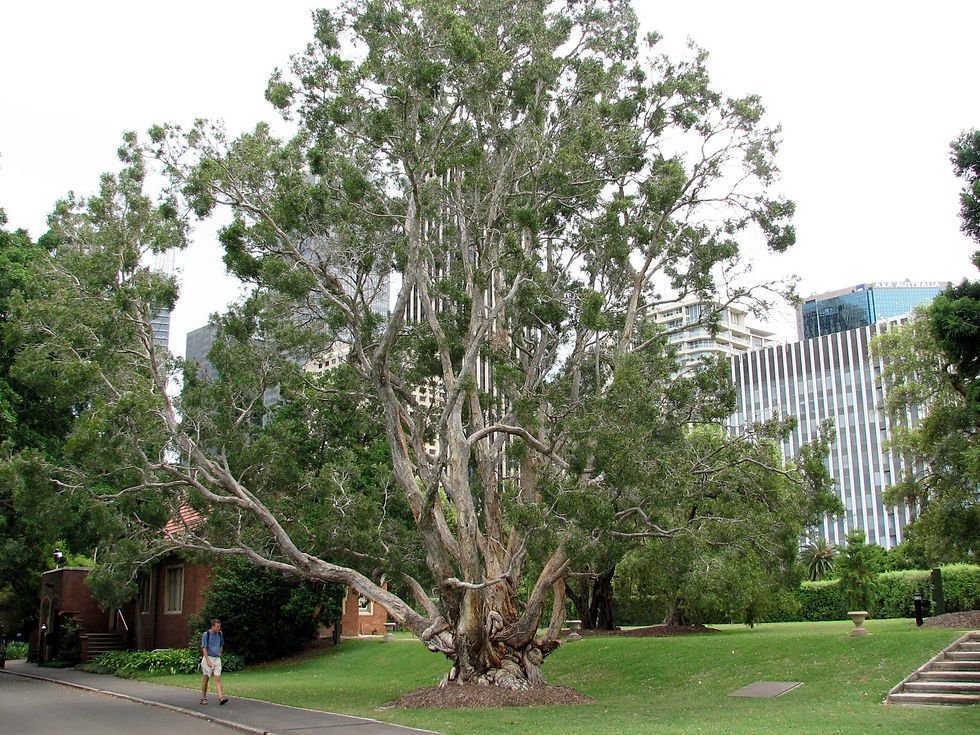
This diverse plant is a member of the Laurel family. Melaleuca is found predominantly in Australia and is the continent’s third most diverse plant genus, encompassing 6.4 million hectacres located mainly in the Australia states of Queensland and the Northern Territory. There are nearly three hundred different plants in the genus, and are known by common names like paperbark, honey-myrtle, and tea tree. Melaleuca plants can range from small shrubs, up to trees that can range up to 115 feet (35 meters). (1) Melaleuca has adapted over the years to life in swamps and boggy places. Some of the trees in the genus have adapted to growing in sandy soil or along the edges of salt pans. (2) About twenty percent of the trees have bark that is thickened and hard, while another twenty percent possess bark that is thin and fibrous. (3) The trees in this genus are all evergreens, and most have distinct oil glands on the leaves. The taller trees in the genus are the ones more commonly known as paperbarks or tea trees.
Aboriginal Wisdom: The Versatility of Melaleuca
The Aboriginal Bundjalung tribe call the plants in this genus “nature’s most versatile plant.” (4) The Aborigines used logs as rafts, branches and leaves for roofing on shelters, and also for food preparation. A stingless bee is native to the Melaleuca forests on Australia’s northern region, and the Aborigines gathered the honey from their hives as well. The Aborigines would crush leaves and mix them with warmed mud as a poultice used in traditional medicinal practices. Oral histories also tell of healing “lakes,” lagoons where leaves from melaleuca trees had fallen and decayed over time, where people would bathe and soak. (5)
Melaleuca was first described in English literature in 1741. The name “tea tree” dates to the later 1700s, when Captain James Cook of Britian’s Royal Navy, sailed to Australia. The men in his crew gathered leaves from some of the shrubs for use in brewing their tea. The Europeans used the melaleuca trunks for marine pilings, internal framing and bracing on the sailing ships, and for frames and flooring in buildings. (6)
The Power of Tea Tree Essential Oil: A Sensory Experience

Melaleuca provides a feast for the senses, from the visual (the clusters of flowers), smell (the camphor-like leaves), and touch (the softness of the bark). The chemical molecule Cineole, also known as Eucalyptol is part of the chemical composition of the oil. This molecule has been used commercially in toothpaste and as a menthol flavorant in cigarettes. Other plants with Eucalyptol content include Eucalyptus, Helichrysum, Rosemary, and Ginger.
Of the various trees within the genus, the one we are most interested in is Melaleuca alternifolia, found in Queensland and New South Wales. This tree grows to a height of roughly twenty feet (seven meters), with a thin, whitish, papery bark. The branches and leaves bear oil glands, the source of the essential oil the world has come to embrace. This oil is distilled through a steam distillation process utilizing the branches and leaves. Alternative distillation methods have been considered, including that of microwave technology, but nothing else has shown much promise from a commercial standpoint.
Tea Tree has been used commercially in cosmetics to cleanse the skin and nails and support a healthy-looking complexion. The oil also helps freshen the air when used in a diffuser. This is important, given that we in the northern hemisphere are in the throes of winter and are spending much of our time indoors. A simple cleansing spray can be made by adding a few drops of Tea Tree in a spray bottle of water. Spraying the solution on surfaces helps cleanse and purify the various surfaces in our homes.
Sustainability in Action: How Co-Impact Sourcing Supports Growers
Recent studies focusing on Tea Tree oil have shown that in addition to Eucalyptol, Tea Tree is high in terpinenes, including Alpha-terpinene and Gamma-terpinene. Terpinenes are also found in citrus oils, as well. One study looked closely at the effects of Tea Tree on the human body. Its findings indicated a promising foundation for future research concerning Tea Tree oil and its impact on the human body. (7)
The Tea Tree essential oil used by doTERRA comes from Australia and Kenya. The sourcing from the latter country helps multiple small-scale farmers as they work to become self-reliant. The trees grow through the summer and fall, with harvesting done during the winter months. A unique facet of this process is that the trees begin growing again about one month after harvesting. In other words, the same trees can be used year after year, without damaging the tree’s health. By following sustainable practices utilized during harvesting, Co-Impact Sourcing is still using trees that have been harvested annually over the past eighteen years. The biomass from distillation is used to prevent weed growth and provide nutrients to supplement the next years’ growth in both Australia and Kenya.
In addition to the support provided by Co-Impact Sourcing to the growers in the two countries, the Healing Hands Foundation has provided the means for supplying water to schools supporting over eight thousand students. In addition, Healing Hands have provided Days for Girls kits to over a thousand girls in Kenya. (8) Several students are also receiving scholarships to help support their tuition and school expenses for higher education. Additional projects being overseen by the Healing Hands Foundation include the construction of several new schools, wells and water storage, and the building of a community center.

I appreciate the cleaning properties of Tea Tree oil. I also appreciate the impact that the purchases I make have on the growers, especially those striving to improve themselves over in Kenya. I encourage you to try Tea Tree oil. Another option to try Tea Tree is the Touch variety. I also encourage you to join us next time, as we take a look at Juniper Berry. Until then, stay safe, and embrace the benefits of the oils in in your life.
Sources
1. Brophy, Craven, and Doran. Melaleucas: Their Botany, Essential Oils and Uses. Australian Center for International Agricultural Research. Canberra, 2013. Referenced in Melaleuca, Wikipedia. Online. <en.wikipedia.org/wiki/Melaleuca>. Accessed 5 February 2025.
2. Foundation for National Parks & Wildlife. “Backyard Buddies: Melaleuca.” Online. <backyardbuddies.org.au/backyard-buddies/melaleuca/>. Accessed 5 February 2025.
3. Brophy, Craven, and Doran.
4. Unionbio. “Melaleuca: History, Properties and Benefits.” Online. <unionbio.it/en/melaleuca-storia-proprieta/?srsitid=AfmBOopDWs5vnwVavBG-gTKZoMW5Uy_JqcGvq1hMgTvWt22ZsF4IA-Y->. Accessed 5 February 2025.
5. Carson, Hammer, and Riley. “Melaleuca alternifolia (Tea Tree) Oil: A Review of Antimicrobial and Other Medicinal Properties.” Clinical Microbial Review, 2006, January; 12(1):50-62. Doi: 10.1128/CMR.19.1.50-62.2006. PMID: 16418522; PMCID: PMC1360273. Accessed 5 February 2025.
6. Montreal Process Implementation Group for Australia & National Forest Inventory Steering and Resource Economics and Sciences. Australia’s State of the Forests Report, 2018. Online. <www.agriculture.gov.au/abares/forestsaustralia/australias-forests/profiles/melaleuca-2019>. Accessed 5 February 2025.
7. Han and Parker. Melaleuca (Melaleuca alternifolia) Essential Oil Demonstrates Tissue-remodeling and Metabolism-modulating Activities in Human Skin Cells. 2017/ Cognent Biology, 3:1, 1318476, DOI: 1080/23312025.2027.1318476. <https://doi.org/10.1080/23312025/2017.1318476>. Accessed 9 February 2025.
8. doTERRA. Melaleuca alternifolia.” Source to you. <sourcetoyou.com/en/story/tea-tree>. Accessed 5 February 2025.
Disclaimer
All views on Harvesters’ Corner are those of the author. I am a Wellness Advocate with dōTERRA, and I use the essential oils daily. Any purchases made through my affiliate link may earn me a commission. The oils are not intended to treat or cure any illness.


Comments